

Best Sleeping Pads for Camping & Hiking: How to Choose the Right One
If you've ever woken up at 3 a.m. with a rock digging into your hip, or spent a "summer" night shivering on a pad that just wasn't warm enough, you already know: your sleeping pad matters just as much as your tent or your sleeping bag. Maybe more.
A good sleeping pad does two jobs. It cushions you from roots, rocks, and uneven ground, and it insulates you from the cold seeping up from below. Skip either job and you're in for a long night, no matter how nice your sleeping bag is.
This guide walks through everything you need to know to choose the right sleeping pad for your trip, whether that's a quick weekend at a car campground or a multi-day trek deep into the backcountry. We'll cover the three main pad types, how to actually understand R-value (without falling asleep reading about thermal resistance), and how to match a pad to your specific use case. At the end, we'll share our top picks across budgets and trip types.
Affiliate Disclosure: Terrain Trails participates in the Amazon Associates program. If you purchase through links on this page, we may earn a small commission at no extra cost to you. We only recommend gear we'd genuinely use ourselves.
Why Your Sleeping Pad Matters as Much as Your Sleeping Bag
It's easy to think of a sleeping bag as the star of your sleep system and the pad as an afterthought. In reality, they're a team, and one can't do its job without the other.
Here's why: insulation works by trapping air and slowing heat loss. When you lie down, your body weight compresses the insulation underneath you, whether that's down, synthetic fill, or foam. Compressed insulation loses most of its ability to trap air, which means the bottom of your sleeping bag provides very little warmth on its own. The ground beneath you, especially cold soil, rock, or snow, will pull heat out of your body far faster than the air around you. That's where your pad comes in. It's doing the insulating work your sleeping bag physically can't do once you're lying on it.
This is also why pairing the wrong pad with the right bag is such a common rookie mistake. A 15°F sleeping bag won't keep you warm if your pad has almost no insulating capacity. We cover the full system, tents, bags, pads, and the rest, in our Best Camping & Hiking Gear Essentials guide if you're still building out your kit from scratch.
The 3 Main Types of Sleeping Pads
Every sleeping pad on the market falls into one of three categories. Each has a distinct set of trade-offs around comfort, weight, durability, and price.
Foam (Closed-Cell) Pads
These are the simple, no-frills foam pads you've probably seen strapped to the outside of someone's backpack. They're made of dense, closed-cell foam that doesn't absorb water and can't be punctured in any way that matters.
Pros:
Indestructible. There's nothing to puncture, tear, or deflate.
No setup required. Unroll it and you're done.
Budget-friendly, often under $50.
Doubles as a sit pad, yoga mat, or extra insulation layer under another pad.
Cons:
Bulky. They don't pack down small and usually ride outside your pack.
Less comfortable than other pad types, especially on uneven ground.
Lower R-value ceiling compared to air pads.
Foam pads are a great fit for budget-conscious campers, thru-hikers who don't want to worry about punctures, and anyone who wants a reliable backup pad for extra warmth in cold conditions.
Self-Inflating Pads
Self-inflating pads use a layer of open-cell foam inside an airtight shell. Open the valve and the foam naturally expands, drawing air in. You can fine-tune the firmness by adding a few extra breaths or letting some air out.
Pros:
Good balance of comfort and warmth.
More structured and supportive than pure air pads.
Reasonably durable thanks to the foam core.
Cons:
Heavier and bulkier than air pads with similar warmth.
Slower to inflate and pack up.
Can still be punctured, though usually less catastrophically than air-only pads.
This style is a solid middle-ground option, especially for car camping or casual backpacking where weight isn't the top priority but comfort still matters.
Air Pads (Inflatable)
Air pads are just what they sound like: an airtight chamber (or series of baffled chambers) that you inflate manually or with a pump sack. Most modern backpacking pads fall into this category because they offer the best warmth-to-weight ratio on the market.
Pros:
Excellent warmth for very little weight.
Pack down smaller than any other pad type.
Highly adjustable firmness.
Cons:
More expensive than foam or self-inflating pads.
Vulnerable to punctures (though most ship with a repair kit).
Can be noisy, crinkling with every movement on cheaper models.
If you're trying to shave ounces off your pack weight, an air pad is almost always the answer. Just know you're trading some durability for that lighter load. For a deeper look at where sleeping pads fit into a minimalist setup, check out our Ultralight Big Four Explained guide, which breaks down the four heaviest items in any pack and how to optimize each one.
Editor's note: this internal link target is in production and will go live shortly. If you're reading this before it's published, hang tight, it's coming.
Understanding R-Value (Without the Confusion)
R-value is the single most important spec on any sleeping pad, and also the most misunderstood. Here's the plain-English version.
R-value measures thermal resistance, meaning how well a material resists the flow of heat through it. The higher the number, the better the pad insulates you from cold ground. It has nothing to do with cushioning or comfort, only warmth.
Since 2020, most major brands (Therm-a-Rest, NEMO, Big Agnes, Sea to Summit, and others) test their pads using a standardized ASTM testing method. That means an R-value of 4 from one brand should perform roughly the same as an R-value of 4 from another, which wasn't always true in the past.
Here's a practical breakdown of what R-value range you actually need:
R-value 1 to 2: Summer-only use. Comfortable down to roughly 50°F overnight lows. Fine for warm-weather backpacking, not much else.
R-value 2 to 3.9: Three-season use. Handles overnight lows into the low 30s. This covers the vast majority of spring, summer, and fall camping trips.
R-value 4 to 5.4: Cold-weather use. Comfortable into the teens. Good for shoulder-season trips, high-altitude camping, or anyone who tends to sleep cold.
R-value 5.5 and higher: Winter use. Built for sub-freezing and even sub-zero nights.
One important note: cold sleepers should size up. If you tend to feel cold at night regardless of what bag you're using, choose a pad with a higher R-value than the "expected" temperature range suggests. It's a lot easier to vent a too-warm pad than to fix one that's not warm enough at 2 a.m.
Common mistake: Plenty of new campers buy a pad based on weight or price and skip R-value entirely, then wonder why they're shivering on a "perfectly good" pad. If you only check one spec before buying, make it this one.
How to Choose the Right Sleeping Pad for Your Trip
The "best" sleeping pad isn't a single product, it's whichever pad matches how, where, and with whom you're sleeping outside. Here's how to narrow it down by trip type.
Car Camping
When you're driving to a campsite rather than carrying everything on your back, weight and packed size matter a lot less. This is the one scenario where a thicker, heavier, more comfortable pad is almost always the right call. Self-inflating pads or even a double-wide air pad can turn your tent into a genuinely comfortable place to sleep.
If you’re newer to camping in general and still figuring out your full gear list, our Camping Gear Checklist for Beginners is a good companion piece. It covers the full setup beyond just your sleep system.
Backpacking & Ultralight
Here, every ounce counts. Lightweight, packable air pads dominate this category for good reason: they offer the best warmth relative to their weight and pack size. If you're assembling a full backpacking kit, our Backpacking Gear Checklist walks through everything else you'll need beyond the pad itself, and pairs well with this guide.
For hikers chasing the lightest possible base weight, sleeping pad choice is one of the four biggest weight-saving opportunities in your entire kit, alongside your tent, pack, and sleeping bag. We go deeper on that tradeoff in our Ultralight Big Four Explained article.
Cold or Wet Weather
Cold and wet conditions punish underprepared gear faster than almost anything else. For sleeping pads specifically, this means prioritizing R-value above almost every other spec, including weight and price. A pad in the 5.5+ R-value range is worth the extra cost and ounces if you're regularly camping in shoulder-season or winter conditions, or anywhere damp ground saps heat quickly.
We go into more detail on building a full cold and wet weather kit, clothing, shelter, and sleep system included, in our Cold & Wet Camping Gear guide.
Editor's note: this internal link target is in production and will go live shortly.
Budget-Conscious Campers
You don't need to spend $200 to sleep reasonably well outside. A solid closed-cell foam pad can be found for well under $50 and will outlast almost any air pad you could buy, simply because there's nothing in it to puncture or fail. If stretching your gear budget further is a priority, our Best Budget Camping Gear That Actually Lasts guide rounds up reliable picks across every major gear category, not just sleeping pads.
Side Sleepers
If you sleep on your side, pad thickness matters more than it does for back or stomach sleepers. Side sleeping concentrates your body weight onto your hip and shoulder, two pressure points that will absolutely find a thin pad's limits. Look for pads in the 3 to 4-inch thickness range. Anything thinner and you risk "bottoming out," feeling the ground through the pad when your hip presses down.
Beginners
If this is your first sleeping pad purchase, don't overthink it. Pick a 3-season pad (R-value 2 to 4) in a reasonably comfortable thickness, and don't worry about shaving every possible ounce. You can always upgrade to something more specialized once you know what kind of camping you actually enjoy doing. A self-inflating pad or a mid-range air pad is a forgiving, low-risk place to start.
Common Sleeping Pad Mistakes to Avoid
A few avoidable mistakes account for most of the bad sleeping pad experiences we hear about:
Ignoring R-value entirely. This is the single biggest factor in whether you sleep warm or cold, yet it's the spec most new campers skip.
Buying a pad that's too short. A pad that ends at your knees leaves your lower legs directly on cold ground. If you're over 6 feet tall, check the pad's length specs before buying.
Overlooking packed size. A pad might be light enough, but if it doesn't fit in your pack alongside everything else, weight savings won't help you.
Skipping the repair kit. Most air pads ship with one. Keep it in your pack, not in a drawer at home.
Assuming a higher price always means a better fit. A $250 ultralight pad is a poor choice for a car camper who values comfort and a low price over shaving ounces. Match the pad to the trip, not the spec sheet.
Not testing inflation before a trip. Inflate any new pad at home first. It's a lot easier to deal with a faulty valve in your living room than at a campsite after dark.
Our Top Sleeping Pad Picks
A few notes before we get into specific picks. We've chosen well-known, widely available models from established brands, the kind you'll find at REI, Amazon, or your local outdoor shop, rather than obscure options that might be out of stock by the time you go to buy. As always, check current pricing and availability before purchasing, since outdoor gear pricing shifts throughout the year.
Best Overall Sleeping Pad
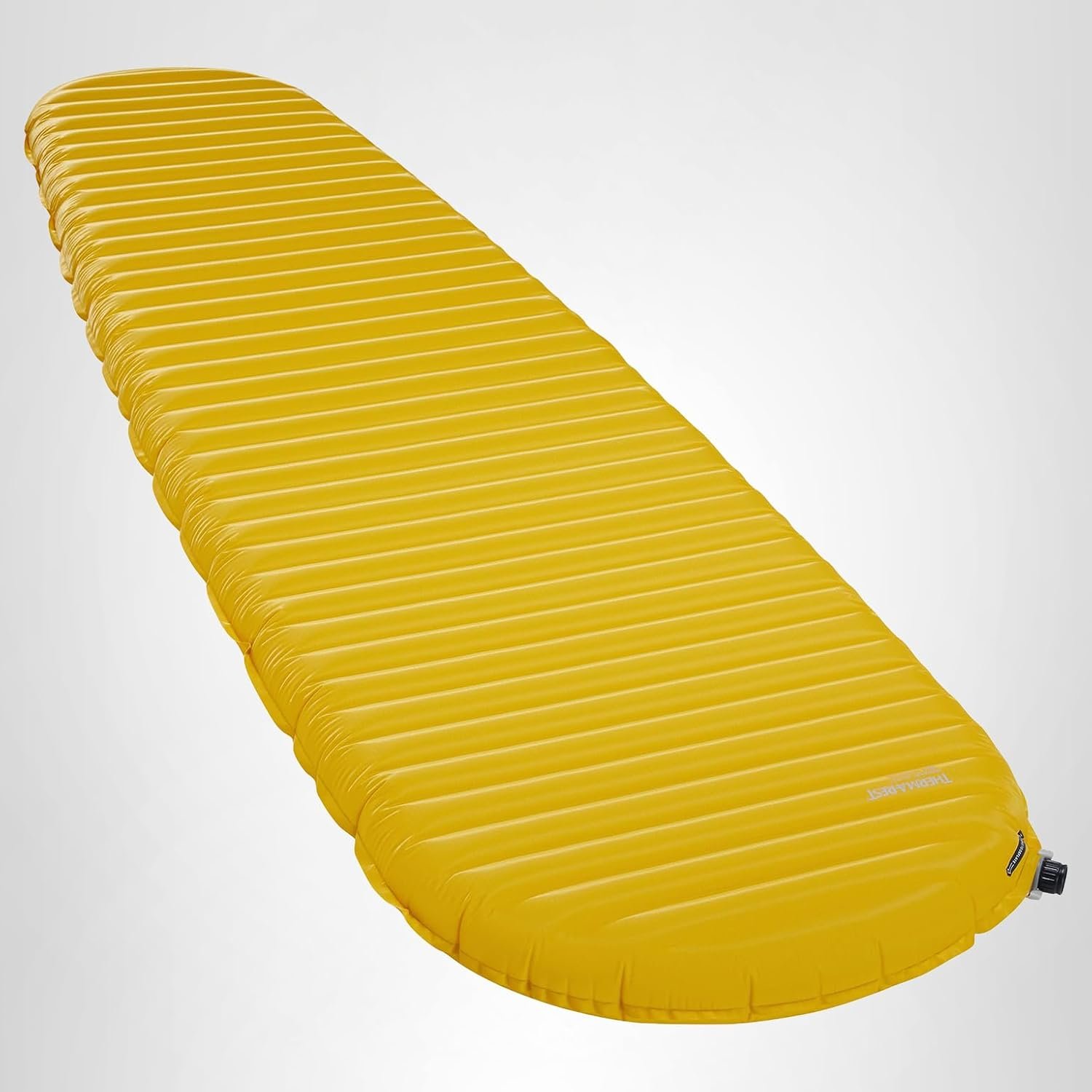
Therm-a-Rest NeoAir XLite NXT
This pad consistently shows up at the top of independent testing roundups for good reason: it balances weight, warmth, and packability better than almost anything else on the market. At around 13 ounces with an R-value in the 4.5 range, it's warm enough for 3-season use and light enough that ounce-counters won't think twice about packing it. The tradeoff is price, this sits in the premium tier, but for hikers who want one pad that does almost everything well, it's hard to beat.
Best Budget Sleeping Pad
Therm-a-Rest Z Lite Sol
If you want a pad that will simply never fail you, this closed-cell foam classic is the answer. At around $60, it's one of the most affordable options from a major brand, and since there's no air chamber to puncture, it's about as close to indestructible as sleeping pads get. It's not going to win any comfort awards, and at an R-value of around 2, it's strictly a 3-season pad, but for thru-hikers, beginners, or anyone who wants a reliable backup pad, it's a smart, low-risk buy.
Best Sleeping Pad for Backpacking
NEMO Tensor All-Season
For multi-day trips where every ounce in your pack matters, the Tensor All-Season hits a genuine sweet spot. It's light, packs down small, and its R-value comfortably covers everything from summer trips into mild winter conditions. Testers consistently note how quiet it is compared to older-generation air pads, which matters more than you'd think when you're sharing a tent.
Best Sleeping Pad for Car Camping
Big Agnes Divide Insulated
Car camping is the one place where you can prioritize comfort over weight without any real downside, and this pad takes full advantage of that. It's thicker and roomier than backpacking-focused pads, with enough insulation for 3-season trips, and it's available in sizes that fit two people if you're camping with a partner. At a more approachable price point than top-tier backpacking pads, it's a smart pick for anyone who's driving to the campsite rather than hiking in.
Best Sleeping Pad for Side Sleepers
Exped Ultra 6.5R
With vertical baffles and a generous 3.5-inch thickness, this pad is specifically well-suited to side sleepers who need extra cushioning at the hip and shoulder. Its R-value also lands solidly in cold-weather territory, so you're getting comfort and serious warmth in the same package. It's a heavier pad than ultralight-focused options, but for anyone who's sacrificed sleep quality for weight savings before, the tradeoff is usually worth it.
Best Sleeping Pad for Cold Weather
Therm-a-Rest NeoAir XTherm NXT
When temperatures drop well below freezing, this is the pad serious cold-weather campers reach for. Its R-value puts it firmly in winter territory, and despite that level of insulation, it stays surprisingly light for a 4-season pad. The reinforced underside fabric also holds up better against rocky or icy ground than lighter-duty air pads. If you're heading into our Cold & Wet Camping Gear territory, this is the pad to build your sleep system around.
Editor's note: this internal link target is in production and will go live shortly.
Best Foam Sleeping Pad
NEMO Switchback
The Switchback is the closed-cell foam alternative to the Z Lite Sol, and the two are close enough in performance that you really can't go wrong with either. It's marginally thicker and holds its loft a little better over time. Beyond its use as a primary pad, it's a popular choice as a sit pad at camp or as an added insulation layer underneath an air pad on especially cold nights.
Best Lightweight Sleeping Pad
NEMO Tensor Elite
For hikers chasing the lowest possible pack weight, this pad is about as light as a true sleeping pad gets while still functioning as a standalone option. It sacrifices some durability and warmth to get there, so it's best suited to 3-season use rather than a do-it-all pad. If shaving grams is your top priority and you're comfortable with the tradeoffs, it's one of the lightest legitimate options on the market.
Sleeping Pad FAQ
How do I know what R-value I need? Match it to the coldest temperature you realistically expect to camp in, not the average. If you tend to sleep cold, size up to the next R-value tier rather than cutting it close.
Can I combine a foam pad and an air pad? Yes, and many backpackers do exactly this for cold-weather trips. Placing a thin foam pad underneath an air pad adds extra insulation and protects the air pad from sharp rocks or debris that might otherwise puncture it.
How long does a sleeping pad last? A well-maintained air pad can last 5 to 10 years with reasonable care. Foam pads can last even longer since there's no air chamber to fail, though the foam will eventually lose some loft and cushioning.
Is a more expensive pad always better? Not necessarily. Price often reflects weight savings and packability more than baseline comfort or warmth. A budget self-inflating pad might be perfectly comfortable for car camping, while an expensive ultralight air pad might feel thin and minimal for the same use case. Match the pad to your trip type first, then let budget narrow the options.
Final Thoughts
Your sleeping pad isn't the gear you'll show off at camp, but it's the piece that determines whether you wake up rested or wrecked. Start with R-value, match the pad type to your trip style, and don't be afraid to prioritize comfort over weight if you're not the one carrying it very far.
If you're still building out the rest of your kit, our Best Camping & Hiking Gear Essentials guide covers everything else you'll need, tents, stoves, water filters, and headlamps included, with the same practical, no-nonsense approach.
