
Backpacks for Beginners: How to Choose the Right Hiking Pack
Picking your first backpack can feel more complicated than it should be. Walk into any outdoor store or scroll through Amazon, and you will see dozens of packs labeled with confusing numbers, straps, and features that mean nothing if you do not already know what you are looking for.
The good news is that choosing the right backpack does not have to be hard. Once you understand how size, fit, and a few key features work together, picking the right pack for your trips becomes a lot more straightforward.
This guide breaks it down in plain language, so you can walk away knowing exactly what to look for, whether you are planning a quick day hike or your first overnight backpacking trip.
Quick Answer: What Backpack Size Do Beginners Need?
If you only remember one thing from this guide, remember this:
Day hikes: 15 to 25 liters
Long day hikes or light overnight trips: 25 to 35 liters
Overnight and weekend backpacking: 40 to 55 liters
Multi-day trips or bulkier beginner gear: 55 to 65 liters
The size you need depends entirely on how long you will be out and how much gear you need to carry. A pack that is too small will leave you cramming gear in or strapping things to the outside. A pack that is too big tempts you to overpack, which means more weight on your back than necessary.
Daypack vs Backpacking Pack: What Is the Difference?
Before diving into sizes, it helps to understand the two basic categories of packs.
A daypack is a smaller, lighter bag designed to carry just what you need for a few hours on the trail. Think water, snacks, a layer or two, and maybe a first aid kit. Daypacks usually do not have a frame, or have a very minimal one, and they sit comfortably without a hip belt doing much heavy lifting.
A backpacking pack is built for carrying everything you need to sleep outdoors. That means a tent, sleeping bag, sleeping pad, food, water, and clothing, all for one or more nights away from your car. These packs are larger, have a supportive frame, and rely heavily on a padded hip belt to transfer weight off your shoulders and onto your hips.
If you are just starting out, your first big decision is simple: are you coming home tonight, or are you sleeping outside? That answer points you toward a daypack or a backpacking pack right away.
If you are still figuring out your full gear list for an overnight trip, our camping gear checklist for beginners is a useful next stop after this guide.
Backpack Size Guide for Beginners
Backpack capacity is measured in liters, which refers to the total volume of space inside the pack. Here is how that breaks down by trip type.
15 to 25L: Best for Day Hikes
This range is ideal for short to moderate day hikes where you need water, snacks, a rain layer, sunscreen, and basic safety items. These packs are lightweight, simple, and rarely have a complex frame system since you are not carrying heavy loads.
25 to 35L: Best for Long Day Hikes or Light Overnights
This size works well for longer day hikes where you need more food and water, or for ultralight overnight trips where your gear is minimal. Some hikers also use this range for warm-weather overnight trips when bulky insulation is not needed.
40 to 55L: Best for Overnight and Weekend Backpacking
This is the sweet spot for most beginner backpackers. A 40 to 55L pack gives you enough room for a tent, sleeping bag, sleeping pad, food, and clothing for one to three nights, without being unnecessarily large. If you are unsure where to start, this range is the safest bet for a first backpacking pack.
55 to 65L: Best for Multi-Day Trips or Bulky Beginner Gear
If you are heading out for four or more nights, or if your gear is on the heavier and bulkier side (which is common when you are just starting out and have not gone ultralight yet), this larger size gives you room to fit everything without forcing it in.
For a full breakdown of what to actually pack once you have your size sorted out, check out our backpacking gear checklist.
How a Backpack Should Fit
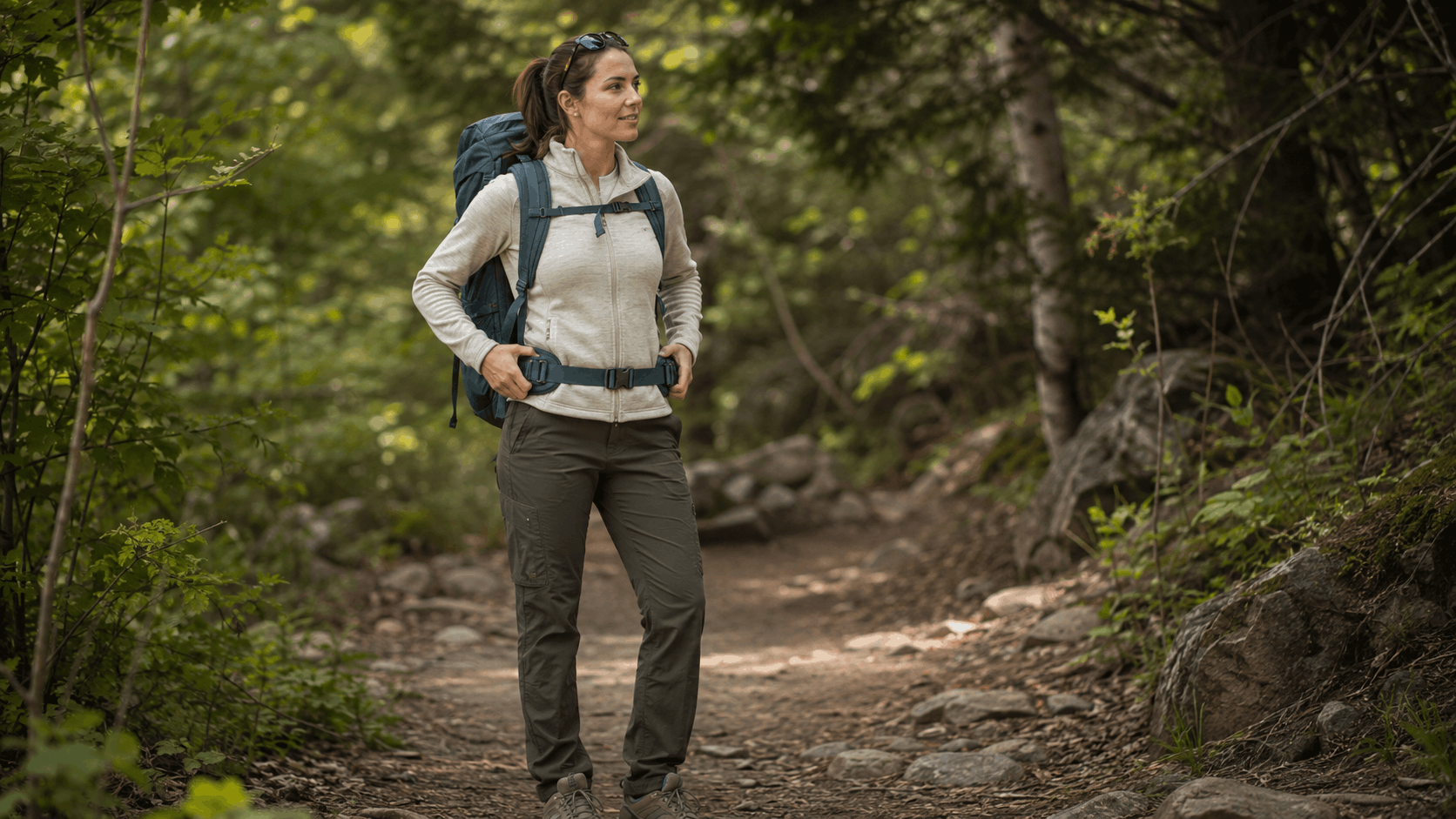
Here is something many beginners do not realize: fit matters more than features. A pack with all the bells and whistles will still feel terrible if it does not fit your body correctly. A simple, no-frills pack that fits well will feel comfortable for hours.
Torso Length
Torso length is the distance from the base of your neck to the top of your hips, and it is different from your height. Two people who are both 5 feet 8 inches tall can have completely different torso lengths.
Most backpacks come in sizes like small, medium, and large, or sometimes adjustable torso lengths. Getting this measurement right determines whether the pack sits correctly on your back, with the hip belt landing on your hips and the shoulder straps wrapping comfortably over your shoulders. If you can, get measured at an outdoor retail store before buying, or look up a simple at-home measuring guide.
Hip Belt Comfort
A properly fitted hip belt should carry most of the pack's weight, not your shoulders. This is one of the biggest mistakes beginners make: they let the pack hang entirely off their shoulders, which leads to soreness and fatigue much faster than necessary.
When trying on a pack, tighten the hip belt so it sits on top of your hip bones, not your waist. The padding should wrap comfortably without digging in. If you feel most of the weight in your shoulders instead of your hips, the pack either does not fit or is not adjusted correctly.
Shoulder Straps and Load Lifters
Shoulder straps should sit flat against your shoulders without gapping or digging in. Load lifter straps, the small straps near the top of the shoulder straps, help pull the pack closer to your body and shift weight toward your hips. Most beginners forget these exist, but adjusting them can make a noticeable difference in comfort.
Features That Actually Matter
It is easy to get distracted by every feature a backpack advertises. Here are the few that genuinely matter for beginners.
Frame Type
Backpacks generally come with an internal frame, an external frame, or no frame at all.
Internal frame packs are by far the most common choice today. The frame sits inside the pack against your back, keeping the load close to your body and improving balance on uneven terrain. This is the right choice for the vast majority of beginner hikers and backpackers.
Frameless packs are lighter but offer less support, and they are usually better suited for experienced ultralight hikers who have already minimized their gear weight. External frame packs are mostly a thing of the past, though you may still see them occasionally for very heavy, bulky loads.
For most beginners, an internal frame pack is the simplest and most comfortable choice.
Pockets and Access
Look for a few practical pockets rather than a confusing number of compartments. Side pockets for water bottles, a hip belt pocket for snacks or a phone, and a top pocket for small essentials cover most needs. Some packs open from the top only, while others have a front panel or side zipper for full access to the main compartment. Front or panel access can make packing and unpacking much easier, especially for beginners still learning how to organize gear.
Hydration Compatibility
Most packs today include a sleeve for a hydration reservoir along with a port for the drinking tube to pass through. If you plan to use a hydration bladder instead of water bottles, confirm the pack has this feature. If you are still deciding how you want to carry and treat water on the trail, our guide to water filtration for hiking covers the basics.
Rain Cover and Weather Protection
Some packs include a built-in rain cover, while others require you to buy one separately. Even if you mostly hike in dry conditions, a rain cover is a cheap and lightweight item worth having, since wet gear can quickly turn an enjoyable trip into a miserable one.
Common Backpack Mistakes Beginners Make
A few mistakes show up again and again with first-time buyers:
Buying based on size alone, without trying the pack on or checking torso length
Letting the shoulders carry the weight instead of the hips
Choosing a pack that is too large "just in case," which encourages overpacking
Ignoring the hip belt fit because it seems like a minor detail
Focusing on extra features instead of basic comfort and fit
Not considering how the pack size connects to the rest of their gear, like their sleeping pad, food, and clothing layers
That last point is worth slowing down on. Your backpack size should match the gear you are actually carrying. If you already know your sleeping setup, our guide to the best sleeping pads for camping and hiking can help you figure out how much space that piece of gear will take up in your pack.
Which Backpack Should You Choose?
If you are still not sure where to land, here is a simple way to think about it based on your next trip.
Day hiking: A 15 to 25L daypack is all you need. Keep it light and simple.
First overnight trip: Look at the 25 to 35L range if your gear is minimal, or move up to 40L if you are still collecting gear and want a bit of extra room.
Weekend backpacking: A 40 to 55L pack is the standard choice and will comfortably fit most beginner gear setups for one to three nights.
Multi-day backpacking: Plan on 55 to 65L, especially if your gear has not been trimmed down to ultralight standards yet. There is nothing wrong with starting here and lightening your load over time.
When in doubt, it is usually better to size slightly down than slightly up. A smaller pack naturally limits how much you bring, which keeps your load lighter and more manageable on the trail.
Final Thoughts
Choosing your first backpack comes down to two things: getting the size right for your trip type, and making sure the pack actually fits your body. Once those two pieces are in place, everything else is a bonus.
If you want to zoom out and see how your backpack fits into your full gear setup, from sleeping systems to water filtration to clothing layers, take a look at our complete best camping and hiking gear essentials guide. It walks through every major gear category so you can build out the rest of your kit with confidence.
