

Headlamps & Camp Lighting: What Beginners Actually Need
If you have ever fumbled around a campsite after dark with your phone flashlight, you already know why good lighting matters. It is one of those things that seems minor until you actually need it, and then it becomes the only thing you care about.
The good news is that camping and hiking lighting is not complicated once you understand a few basics. You do not need the brightest light on the market, and you do not need five different light sources. You need the right tool for the kind of trip you are taking.
This guide breaks down headlamps, lanterns, and flashlights in plain terms, explains what specs actually matter, and helps you put together a lighting setup that fits how you camp and hike. If you have not already gone through it, our complete camping and hiking gear checklist is a good companion to this one for making sure lighting fits into your overall gear plan.
Quick Answer: What Lighting Do You Need for Camping and Hiking?
For most people, the answer is simple: start with a headlamp. It is the single most useful light source for camping and hiking because it keeps your hands free and works for nearly every situation, from setting up a tent in the dark to walking to the bathroom at a campground.
From there, what you add depends on your trip type:
Day hikers often only need a headlamp as backup lighting in case they are out later than planned.
Backpackers want a lightweight headlamp and nothing else, since every ounce counts.
Car campers and group campers benefit from adding a lantern for shared light around the campsite.
You do not need to buy everything at once. A reliable headlamp covers the vast majority of situations, and you can add a lantern or backup light later as your trips get longer or more social.
Headlamp vs Flashlight vs Lantern
These three tools all produce light, but they solve different problems. Understanding the difference will save you from buying the wrong thing.
Why a Headlamp Should Usually Come First
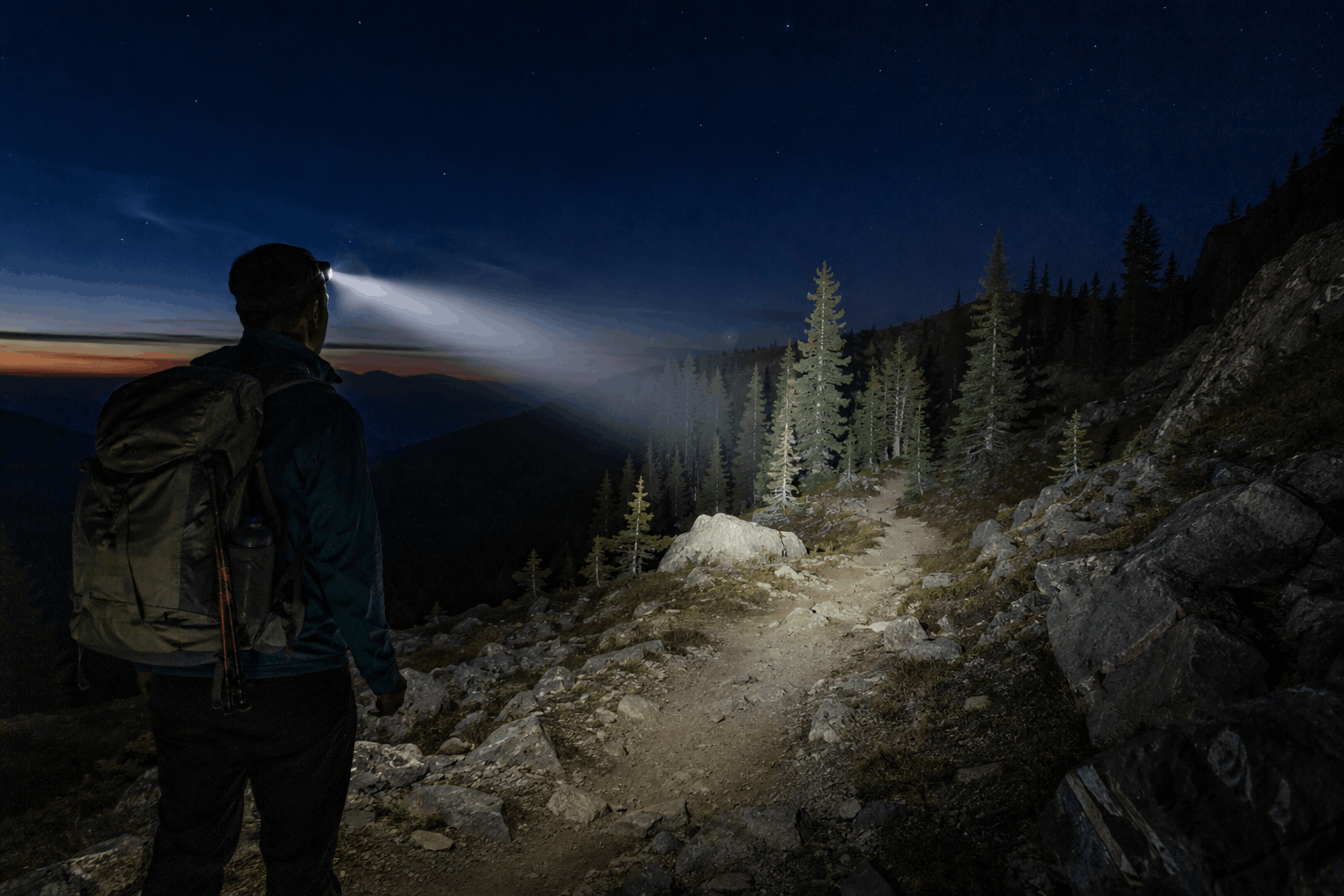
A headlamp sits on your head and points wherever you look, which means your hands stay free for cooking, setting up camp, reading a map, or steadying yourself on a trail. This hands-free design is the main reason headlamps are considered essential gear rather than optional extras.
Headlamps are also compact and lightweight, which makes them easy to pack for any kind of trip, from a short day hike to a multi-day backpacking route. If you are only going to own one light source, this should be it.
When a Lantern Makes Sense
Lanterns are built to light up an area, not a direction. They work well for car camping, group trips, or any situation where several people need to see around a picnic table, tent area, or cooking station at the same time.
Lanterns are not designed to be carried while you move, and most are bulkier and heavier than headlamps. They are a nice addition to a car camping or established campsite setup, but they are not a replacement for a headlamp.
Why Flashlights Are Usually Secondary
Flashlights are familiar and easy to use, but they take up a hand that you will often need for something else. Most experienced campers and hikers treat a flashlight as a backup option rather than a primary light source. If you already own one, it can serve as a reliable spare, but it is rarely worth buying as your main light when a headlamp does the job better for most situations.
How Many Lumens Do You Actually Need?
Lumens measure how bright a light is, and it is easy to assume that brighter automatically means better. In practice, most beginners overbuy on brightness and underthink everything else.
Here is a simple guide:
50 to 100 lumens is enough for camp tasks like cooking, organizing gear, or walking around a campsite.
150 to 300 lumens is a comfortable range for hiking on a trail at night.
300+ lumens starts to matter mainly for technical terrain, fast-moving trail running, or situations where you need to see far ahead quickly.
Most casual campers and hikers will be perfectly served by a headlamp in the 150 to 250 lumen range with adjustable brightness settings. A lower setting extends battery life for routine tasks, and a higher setting is there when you actually need it.
Battery Life, Rechargeable Lights and Spare Batteries
Battery performance is where a lot of beginners run into trouble, usually because they focus on brightness and forget to think about how long that brightness will last.
Rechargeable vs Replaceable Batteries
Rechargeable headlamps, usually charged through USB, are convenient for car camping or trips close to civilization where you can recharge between outings. They reduce waste and are often more cost-effective over time.
Replaceable battery headlamps, typically using AAA batteries, are generally the safer choice for backpacking and longer trips. You can carry spare batteries without needing a power source, which matters if you will be out for several days without access to an outlet or power bank.
Some headlamps offer both options, which gives you flexibility depending on the trip.
Why Burn Time Matters More Than Max Brightness
Burn time tells you how long a light lasts on a given setting, and it is usually more important than the maximum lumen rating. A headlamp with a high lumen count but poor burn time can leave you in the dark exactly when you need light most.
Check burn time at both low and high brightness settings before buying, not just the maximum brightness number listed on the package.
Features That Actually Matter
Beyond brightness and battery type, a few features make a real difference in everyday use.
Red Light Mode
Red light mode preserves your night vision and is far less disruptive to other people at a shared campsite. It is especially useful for reading a map, checking gear inside a tent, or moving around camp without waking up your tent mates. Most quality headlamps include this as a built-in setting.
Beam Distance and Flood Light
Beam distance refers to how far a light reaches in a focused beam, which is useful for spotting trail markers or seeing what is ahead on a dark path. Flood light spreads illumination across a wider area, which works better for close-range tasks like setting up a tent or cooking.
Many headlamps let you switch between these modes or offer a mixed beam that does both reasonably well. If you mainly hike at night, prioritize beam distance. If you mainly use your light around camp, flood coverage matters more.
Water Resistance
Weather does not wait for convenient timing, so some level of water resistance is worth having even if you do not plan to hike in the rain. Look for a basic water-resistance rating that protects against splashes and light rain. You do not need a fully waterproof light unless you are doing serious wet-weather trips, but a completely unprotected light is a risk not worth taking. For more on managing wet and cold conditions, the gear essentials guide covers broader weather preparation as well.
Comfort and Strap Fit
A headlamp you are not comfortable wearing will not get used, no matter how good its specs are. Look for an adjustable strap, a comfortable fit that does not bounce while you move, and a reasonable weight. Heavier headlamps with larger battery packs are often built with a rear weight or wider strap for better balance, which is worth checking if you plan to wear it for extended periods.
Best Lighting Setup by Trip Type
Day Hiking
A simple headlamp as backup lighting is usually all you need. Most day hikes are planned to finish before dark, but trail conditions, weather, or pace can change that. A lightweight headlamp with decent burn time is cheap insurance.
Overnight Backpacking
Prioritize a lightweight headlamp with reliable burn time over raw brightness. Every ounce matters on a backpacking trip, so this is not the place for a bulky, heavy-duty light. If you are still working out your overall pack setup, our backpacking gear checklist walks through how lighting fits alongside the rest of your gear.
Weekend Camping
A headlamp plus a small lantern covers most weekend camping needs. The headlamp handles hands-free tasks, while the lantern provides ambient light around the site in the evening. If you are new to camping in general, our beginner camping checklist is a useful starting point for building out the rest of your kit.
Car Camping
Car camping allows more flexibility since weight is less of a concern. A headlamp for personal use plus a larger lantern for the site works well, and since you have access to a vehicle, rechargeable options become much more practical.
Group Camping
When camping with others, shared lighting becomes more important. A central lantern at the cooking or gathering area, combined with individual headlamps, keeps everyone able to see without everyone needing to point a light at the same spot.
Common Lighting Mistakes Beginners Make
Buying the highest lumen headlamp available without checking burn time, then running out of light partway through a trip.
Relying only on a phone flashlight, which drains battery you may need for navigation or emergencies.
Forgetting backup batteries or a backup light source entirely.
Choosing a heavy, feature-loaded headlamp for backpacking when a simple lightweight model would serve better.
Not testing red light mode or brightness settings before a trip, then figuring it out for the first time in the dark.
Final Lighting Checklist
Before your next trip, confirm you have:
A headlamp with adjustable brightness settings
A clear understanding of its burn time at the settings you will actually use
Spare batteries or a charged backup power source, depending on your headlamp type
Red light mode, if available, for nighttime camp use
A basic water-resistance rating appropriate for your trip conditions
A lantern, if you are car camping or camping in a group
A backup light source, even something simple, in case your primary light fails
Final Thoughts
Camp lighting is one of those categories where it pays to keep things simple. A reliable headlamp with good battery life will cover the majority of your camping and hiking needs, and you can build out from there based on how you actually camp, not based on which light has the most impressive spec sheet.
If you are still putting together the rest of your kit, our full gear essentials guide covers headlamps alongside the other core categories like tents, sleeping pads, backpacks, and water filtration, so you can see how lighting fits into your overall setup.
